
A xenon UV lamp is a type of gas discharge light source that uses high-pressure xenon gas as the luminous medium. Renowned for its broad continuous ultraviolet output, high luminous intensity and excellent stability, it stands as one of the most widely applied UV light sources in precision optical analysis, industrial inspection and scientific research. Its working principle relies on applying a high-voltage electric field across the lamp electrodes to excite the xenon gas inside the tube into plasma discharge. As xenon atoms transition from high-energy to low-energy states, they radiate a continuous spectrum covering deep ultraviolet, ultraviolet, visible and even near-infrared bands. Among these, the UV band delivers concentrated output energy and a smooth spectral curve, meeting the optical requirements of various high-precision UV detection tasks.
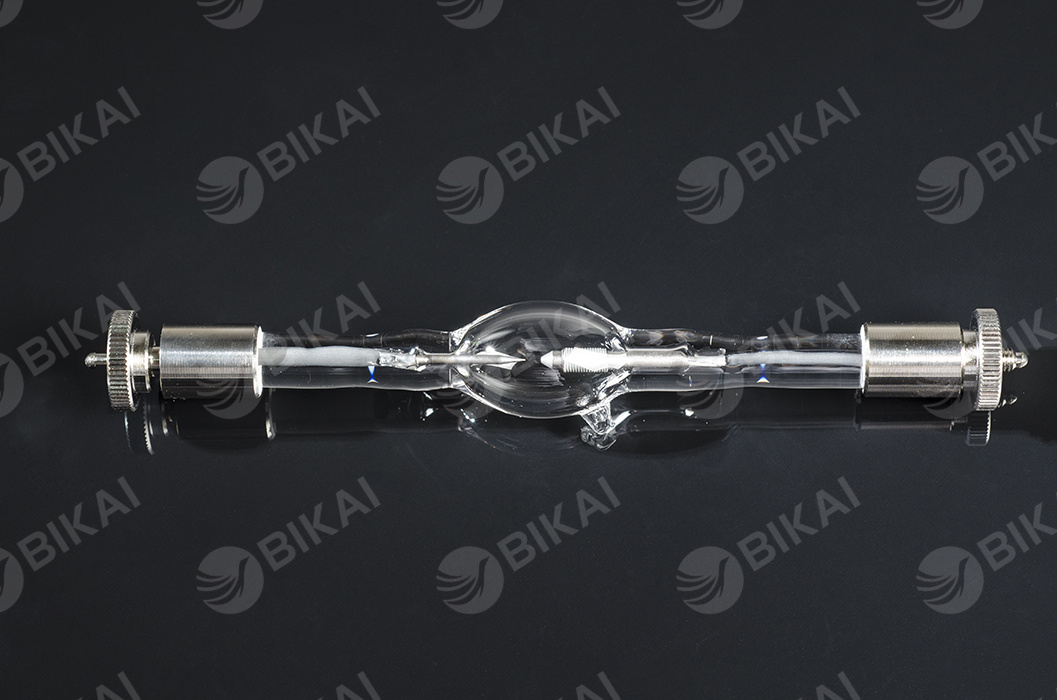
In terms of core performance, xenon UV lamps offer several irreplaceable technical advantages. First is their ultra-wide continuous spectral coverage. A standard xenon UV lamp can deliver continuous spectral output from 185 nm to 2500 nm, fully spanning deep UV, UVA/UVB/UVC bands, visible light and the near-infrared region. Unlike traditional detection systems that require a dual-light-source combination of deuterium and tungsten lamps, a single xenon UV lamp supports full-band scanning detection, greatly simplifying the optical system architecture and reducing equipment integration and calibration costs. Second is its high output density and stability. High-quality xenon UV lamps adopt high-purity synthetic fused silica as the output window, paired with optimized electrode structures and gas formulations to achieve extremely high UV transmittance and output power density. Lamps that undergo precise burn-in calibration before delivery maintain extremely low light intensity fluctuation during operation, sustaining stable reference light output over long periods and providing a reliable optical benchmark for quantitative detection. In addition, xenon UV lamps feature fast startup, high spot uniformity and no interference from characteristic spectral lines. Compared with line-spectrum light sources such as mercury lamps, their continuous and smooth spectral properties are better suited for full-wavelength scanning and broad-spectrum qualitative analysis scenarios.
From a technical parameter perspective, xenon UV lamps are categorized into multiple types by power rating, spectral characteristics and structural form. In terms of power, products range from 5W micro xenon lamps to kilowatt-class high-power models, with the 10W to 150W power segment being the mainstream choice for analytical instruments, balancing light output and service life. Regarding spectral properties, they can be divided into deep-UV type, UV-enhanced type and full-spectrum type based on window material and gas formulation. Deep-UV models use high-purity ozone-free fused silica to effectively transmit deep UV light below 200 nm, suitable for far-UV detection demands. UV-enhanced models optimize the gas formula to boost output energy in specific UV bands, targeting specialized detection scenarios. Full-spectrum models pursue balanced output across all wavelengths, ideal for general-purpose spectral analysis equipment. Structurally, xenon UV lamps fall into long-arc, short-arc and pulsed categories. Short-arc xenon UV lamps feature a small luminous spot and high brightness, facilitating optical coupling and focusing, making them the preferred light source for precision instruments such as spectrophotometers and chromatography detectors.
Xenon UV lamps serve a wide range of applications across high-tech industries and scientific research. In the analytical instrument sector, they are the core light source for UV-Vis-NIR spectrophotometers, HPLC UV detectors and fluorescence spectrophotometers. They support qualitative and quantitative compound analysis, pharmaceutical ingredient testing, food nutrition and safety inspection, and chemical raw material purity verification, where stable UV output ensures the accuracy and repeatability of test results. In semiconductor manufacturing, xenon UV lamps are used for wafer surface defect inspection, photoresist property testing and thin-film optical parameter measurement. Their high spot uniformity and deep UV output capability meet the demands of nanometer-precision detection. In environmental monitoring, they can be integrated into online water quality monitoring devices and air quality monitoring systems, detecting organic matter and heavy metal ions in water, as well as ozone, volatile organic compounds (VOCs) and other pollutants in the atmosphere via the UV absorption method, enabling 24/7 continuous online monitoring. In biomedical and life science fields, xenon UV lamps are applied in nucleic acid and protein detection, cell fluorescence imaging and microplate reader analysis, with their smooth continuous spectrum compatible with the excitation requirements of various fluorescent dyes. They also find extensive use in material aging testing, optical component transmittance measurement and UV photocatalysis research.
For selection and daily maintenance, there are clear best practices for xenon UV lamps. When selecting a model, key considerations include spectral range, output power, spot size, interface specifications and expected service life. It is also essential to match the lamp with a dedicated regulated power supply of corresponding specifications, as power supply fluctuations can degrade luminous stability and shorten lamp life. During daily operation, frequent on-off cycles should be minimized, since each startup imposes an instantaneous impact on the electrodes and frequent switching drastically reduces service life. The working environment should be kept dry, dust-free and well-ventilated, and the window should be kept free of oil stains and dust, which would otherwise reduce UV transmittance and cause local overheating. If stains appear on the window surface, wipe gently with lint-free cloth and anhydrous ethanol to avoid scratching the fused silica. Regularly check the lamp’s light intensity output and electrode condition; when the light intensity drops below 70% of the initial value, lamp replacement is recommended to maintain stable performance of the detection equipment.
Overall, the xenon UV lamp is an indispensable core component in modern precision optical detection systems, with mature performance and strong adaptability. As analytical detection technology continues to advance, xenon UV lamps are evolving toward higher brightness, longer service life and lower power consumption, delivering stable and reliable optical support for high-precision testing and scientific innovation across industries.