
UV-Vis Spectrophotometer Deuterium Lamp is the core light source component of UV-Vis spectrophotometers, specifically designed to provide stable and continuous light radiation for the instrument’s ultraviolet (UV) band detection. It is an indispensable key component in scenarios such as laboratory qualitative and quantitative analysis, industrial quality inspection, and scientific research. Its working principle is based on the glow discharge of low-pressure deuterium gas. When a high voltage is applied to the two electrodes, deuterium atoms are excited to transition from a high energy level back to a low energy level, emitting a continuous UV spectrum covering the wavelength range of 185-400 nm, which exactly matches the detection needs of UV-Vis spectrophotometers in the UV region. It is also one of the few light sources that can provide a stable continuous UV spectrum.
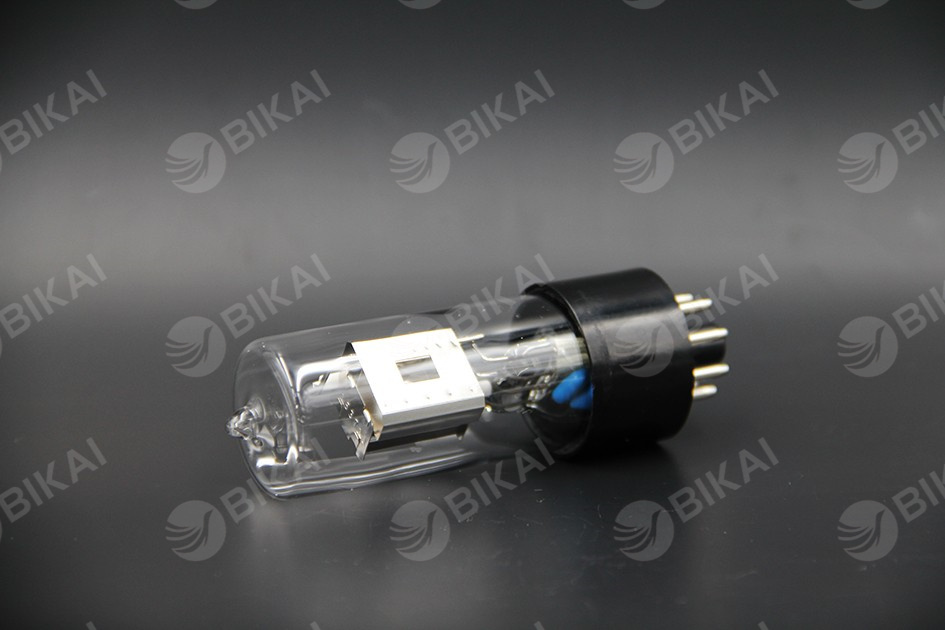
UV-Vis Spectrophotometer Deuterium Lamp
Compared with ordinary hydrogen lamps, UV-Vis Spectrophotometer Deuterium Lamps have a longer service life and higher radiation intensity. Especially in the short-wave UV region (185-250 nm), their luminous intensity is 3-5 times that of hydrogen lamps, which can effectively improve the sensitivity and accuracy of detection and avoid detection errors caused by insufficient light source intensity. At the same time, high-quality deuterium lamps have excellent luminous flux stability, with fluctuations controlled within ±0.5% per hour, fully meeting the requirements for key detection in the ISO 17025 standard. They are suitable for various precision detection scenarios such as pharmaceutical purity testing, nucleic acid quantification, protein analysis, and environmental water quality monitoring.
In practical use, the service life of UV-Vis Spectrophotometer Deuterium Lamps is usually 1000-2000 hours, and their service life is closely related to usage habits. Frequent switching of the lamp will impact the filament and electrodes, accelerating aging. Therefore, it is recommended to keep the deuterium lamp on after the instrument is turned on and preheated. At the same time, avoid touching the quartz shell of the lamp body directly with hands, as skin oils will adhere to the surface and affect the light transmission efficiency. If touched accidentally, clean it with isopropanol before installation. In addition, stable power supply and unobstructed heat dissipation of the instrument can also effectively extend the life of the deuterium lamp. When the instrument’s baseline noise increases significantly or the UV energy is too low, it usually means that the deuterium lamp has aged and needs to be replaced in time and the optical path calibrated.
At present, UV-Vis Spectrophotometer Deuterium Lamps have been widely used in various fields such as pharmaceuticals, food, environmental protection, and scientific research. In the pharmaceutical industry, they are used for quantitative analysis of active pharmaceutical ingredients and impurity detection; in the environmental protection field, they can detect heavy metal ions and organic matter content in water; in scientific research laboratories, they are important auxiliary tools for research in fields such as biochemistry and materials science. With the continuous upgrading of detection technology, the performance of deuterium lamps is also constantly optimized. New types of deuterium lamps with long service life, high stability, and ozone-free are constantly emerging, further meeting the precision detection needs in different scenarios and providing reliable guarantee for the accurate development of various analytical work.